
What is Inflatable vs Hardboard SUP? A Complete 2026 Guide
If you’re stuck choosing between an inflatable vs hardboard SUP, you’re probably trying to balance stability, portability, and performance without wasting money. The good news is that the “best” board depends less on hype and more on how you plan to paddle, transport, and store it. In this guide, you’ll learn exactly how each type works, where each shines, and which products make the smartest buy in 2026.
How It Works
A stand up paddle board (SUP) works by floating your body weight on a wide, buoyant platform while you use a paddle to move and steer. The main difference in the inflatable vs hardboard SUP debate is the board’s construction: inflatable boards use a drop-stitch core and airtight outer layers that become rigid when pumped up, while hardboards use a solid foam core with a fiberglass, epoxy, or similar shell.
Inflatable SUPs rely on internal threads that keep the top and bottom layers separated as air pressure builds, creating a surprisingly firm surface. Hardboards do not need inflation, so they feel rigid immediately and often deliver a more direct connection to the water, which is why many experienced paddlers prefer them for certain performance-focused uses.
In practical terms, inflatables win on portability and storage, while hardboards usually win on pure stiffness and a more “locked-in” ride. Modern inflatable boards, especially touring models, have narrowed the performance gap significantly, making them a strong option for many buyers who want one board that does a little bit of everything.
Key Benefits & Use Cases
Why people choose inflatable SUPs
Inflatable boards are popular because they pack down small, fit in a car trunk, and are easier to store in apartments, garages, and closets. They’re also a smart choice for casual paddlers, beginners, travelers, and anyone who wants a board that is less awkward to carry from home to the water.
Why people choose hardboard SUPs
Hardboards are often favored by paddlers who want maximum stiffness, a more refined glide, and a board that feels ready the moment it touches the water. They can be a better match for people who have roof rack access, dedicated storage space, or a stronger focus on performance paddling.
Best use cases by board type
- Inflatable SUP: beginners, families, touring, travel, fishing, and mixed-use recreation
- Hardboard SUP: performance paddling, race-oriented use, and paddlers who prioritize rigidity and speed feel
- Inflatable SUP: ideal when portability and easy storage matter most
- Hardboard SUP: ideal when you want a more traditional water-feel and don’t mind the transport hassle
For many buyers comparing inflatable vs hardboard SUP options, the deciding factor is convenience. If you want to paddle more often because the board is easy to own, inflate, and store, an inflatable often makes the most sense.
What to Look For When Buying
1. Board stiffness and construction
Stiffness affects how stable the board feels underfoot and how efficiently it moves through the water. For inflatables, look for drop-stitch construction, reinforced rails, and claims that indicate a firmer ride; for hardboards, look for quality shell construction and a design suited to your skill level.
2. Board length and shape
Longer boards tend to track straighter and glide better, while shorter boards are easier to turn and handle in tight spaces. Touring shapes are a strong fit for longer paddles, while wider all-around shapes are usually better for beginners.
3. Width and stability
Width matters because it affects balance. A wider board generally feels more stable, which is helpful for new paddlers, larger paddlers, or anyone carrying gear, a pet, or a child.
4. Weight capacity
Always check the board’s maximum capacity, not just the marketing language. A board that’s overloaded will sit lower in the water, feel slower, and become harder to control.
5. Portability and included accessories
If you choose an inflatable, check whether the package includes a pump, paddle, leash, fin, and bag. The best value is often the board that reduces the number of extra purchases you need to make before your first session.
Top Recommended Products
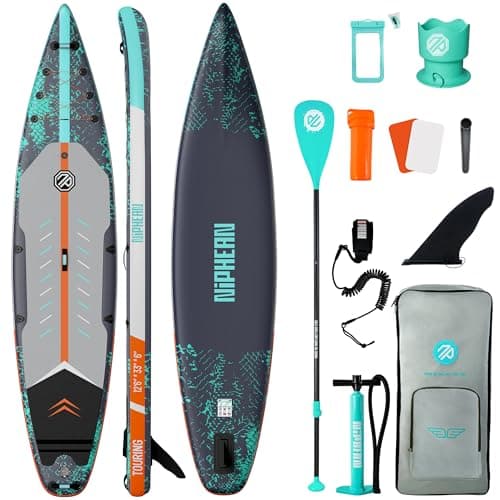
Niphean 12'6" Paddle Board 4.7★ (20% OFF — Was $349.99) ✓ Prime $279.99
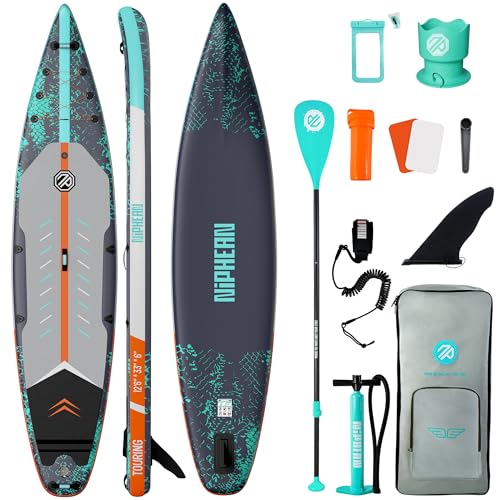

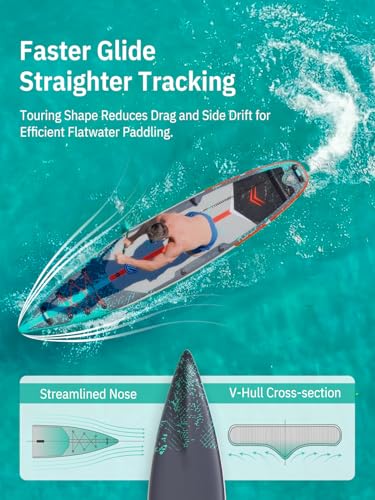
This board is a strong example of how an inflatable can close the gap with a hardboard. Its touring shape, V-hull design, and claim of up to 160% stiffness make it appealing for paddlers who want better glide without giving up portability.
- ✓ Touring nose and V-hull design for efficient glide
- ✓ Up to 160% stiffer with woven drop-stitch construction
- ✓ 550 lb capacity for gear, pets, or a second rider
- ✓ Lightweight at 20.39 lb for easier carrying
- ✓ Complete kit includes paddle, pump, leash, fin, backpack, phone bag, and repair kit
- ✓ 3-year manufacturer warranty
- ✗ Inflatable setup still takes time compared with a hardboard
- ✗ Touring length may feel less nimble than shorter all-around boards
Niphean 12'6" Paddle Board 4.7★ (17% OFF — Was $349.99) ✓ Prime $289.99
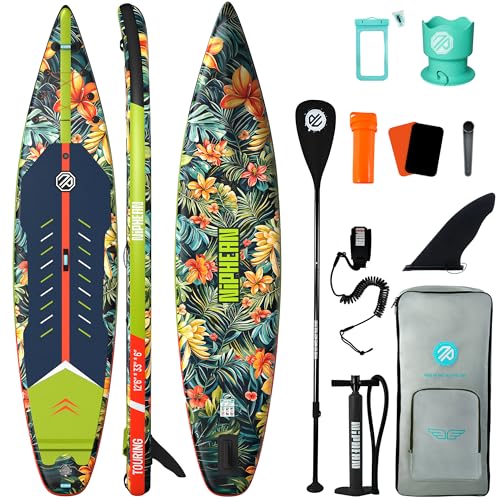
This version is essentially the same feature set with a different listing and image set, which can be helpful if you’re comparing current pricing and availability. It’s especially relevant for buyers who want a touring-style inflatable SUP with a complete accessory bundle.
- ✓ Touring-focused shape for distance paddling
- ✓ 550 lb capacity for versatile use
- ✓ Lightweight and easier to transport than a hardboard
- ✓ Includes the core accessories most first-time buyers need
- ✓ Prime shipping and warranty support
- ✗ Not as instantly rigid as a premium hardboard
- ✗ Best suited to paddlers who value glide more than compact turning
Niphean 12'6" Paddle Board 4.7★ (17% OFF — Was $349.99) ✓ Prime $289.99
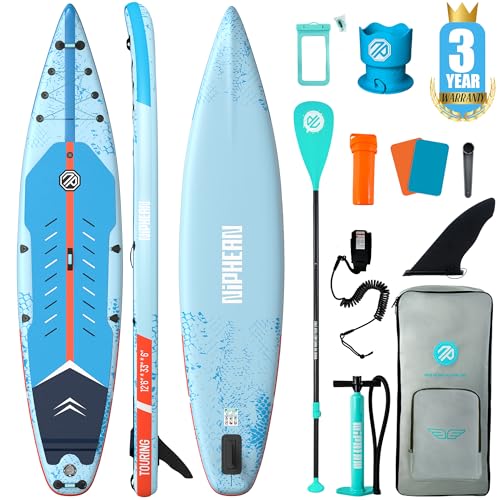
If your main question is whether an inflatable can feel close to a hardboard, this listing is one of the clearest answers. The stiffness claim, touring design, and high capacity make it a compelling all-around pick for longer outings.
- ✓ Hardboard-like stability from premium drop-stitch construction
- ✓ Efficient glide for lakes, bays, and coastal water
- ✓ 33" deck for improved balance
- ✓ Good for gear-heavy trips, camping, and fishing
- ✓ Includes a full accessory kit
- ✗ Still requires inflation before use
- ✗ Touring length may be more board than a casual beach paddler needs
Retrospec Weekender Inflatable Stand Up Paddle Board 4.6★ ✓ Prime $289.99
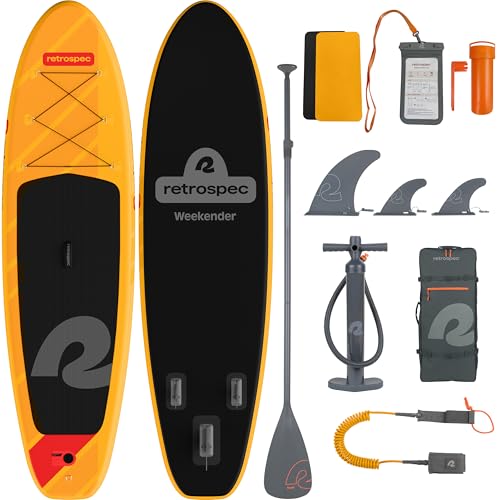


The Retrospec Weekender is a classic entry-level inflatable SUP for buyers who want easy storage, easy transport, and a stable ride. It’s a practical option if your priority is convenience over touring speed.
- ✓ Ultra-portable 17.5 lb design
- ✓ Includes paddle, pump, travel bag, waterproof case, and leash
- ✓ Wide 32" deck for stability
- ✓ Puncture-resistant PVC construction
- ✓ Brushed EVA deck pad for comfort and grip
- ✗ Shorter 10'6" length is less efficient for long-distance touring
- ✗ Not as performance-oriented as a longer touring board
Common Mistakes to Avoid
- Choosing only by price: the cheapest board may lack stiffness, stability, or useful accessories.
- Ignoring storage and transport: a hardboard can be a headache if you don’t have roof racks or space.
- Buying the wrong shape: a touring board is not always the best choice for casual beach use.
- Overlooking weight capacity: an overloaded board performs worse and feels less stable.
- Assuming all inflatables feel the same: construction quality matters a lot in the inflatable vs hardboard SUP comparison.
Another common mistake is thinking hardboards are automatically “better.” For many paddlers, the best board is the one they’ll actually use often, and that usually means the most convenient option wins.
Frequently Asked Questions
Is an inflatable SUP better than a hardboard SUP?
It depends on your priorities. Inflatable SUPs are better for portability, storage, and travel, while hardboards are better for immediate rigidity and a more traditional performance feel.
Do inflatable SUPs feel as stable as hardboards?
High-quality inflatables can feel very stable, and some are designed to be much stiffer than older models. They still usually feel a little different from hardboards, but the gap has narrowed a lot.
Which is better for beginners: inflatable or hardboard SUP?
Most beginners prefer inflatable SUPs because they’re easier to store, transport, and handle on land. A wider inflatable board can also feel very stable on the water.
Which type of SUP is faster?
In general, hardboards have the edge in speed and glide because of their rigidity. However, a well-designed touring inflatable can perform very well for recreational distance paddling.
What size SUP should I buy?
Choose based on your height, weight, skill level, and intended use. For stable all-around use, a wider board is usually easier; for touring, a longer shape often tracks better and covers distance more efficiently.
Get the Full Water Sports & Fishing Buyer's Guide
Download our detailed comparison with specs, scores, and our honest verdict — delivered straight to your inbox.
Free. No spam. Unsubscribe anytime.
Was this review helpful?
Be the first to share your feedback on this review.
Sign in to vote and let us know what you think.
Discussion (0)
No comments yet. Be the first to start the discussion.
Related Reviews
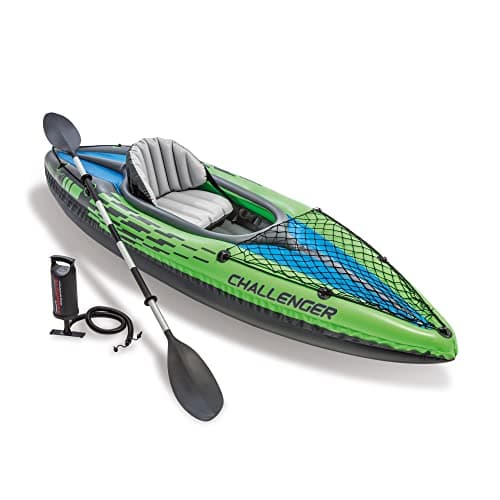
8 Best Inflatable Kayaks in 2026 — Lightweight, Durable Picks for Lakes, Rivers, and Easy Transport
If you want the best inflatable kayaks 2026 has to offer, you’re probably trying to solve one of three problems: limited storage space, a tight budget, or the need for a kayak that’s easy to carry and quick to inflate. The picks below focus on real-world value, including stability, durability, porta

Best Fishing Combos for Every Budget in 2026: Ranked by Price & Performance
If you’re searching for the best fishing combos under $100 , the reality is simple: most “combo” listings in this budget are ultra-basic starter setups or add-on accessories, not full rod-and-reel kits. That means the smartest buy depends on whether you want the absolute lowest-cost way to get on th
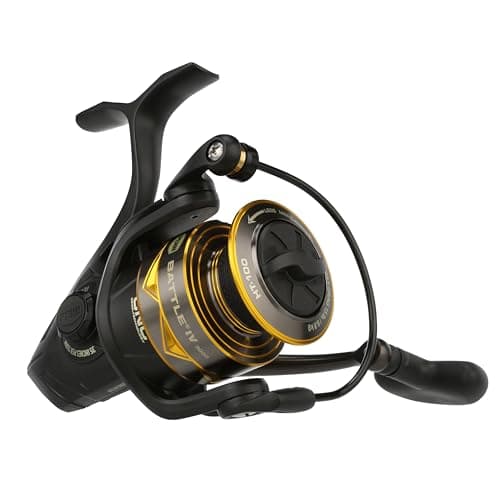
Penn Battle IV Review (2026): Honest Verdict After Testing
The Penn Battle IV feels built for anglers who are hard on gear and expect it to survive salt, spray, and repeated use. The full metal body and sideplate give it a rigid, confidence-inspiring feel that helps the reel stay aligned under load, especially when fighting stronger fish.