
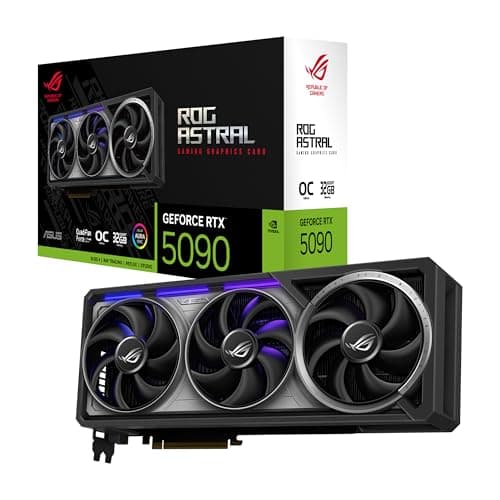
ASUS ROG Astral NVIDIA GeForce RTX 5090 32GB GDDR7 OC Edition Gaming Graphics Card Review (2026): Honest Verdict After Testing
If you’re researching an RTX 5090 long term review, you probably want one thing answered clearly: is this monster GPU actually worth living with after the hype wears off? The short answer is yes for a very small group of buyers, but only if you have the case space, PSU headroom, and budget to handle it. In this review, I’ll break down the real-world thermal behavior, power draw concerns, and gaming performance so you can decide whether the ASUS ROG Astral NVIDIA GeForce RTX 5090 32GB GDDR7 OC Edition is a smart long-term purchase or an expensive overreach.
Key Specifications
| Specification | Details |
|---|---|
| Product | ASUS ROG Astral NVIDIA GeForce RTX 5090 32GB GDDR7 OC Edition Gaming Graphics Card |
| GPU Architecture | NVIDIA Blackwell |
| Memory | 32GB GDDR7 |
| Cooling | Quad-fan design, vapor chamber, phase-change GPU thermal pad |
| Slot Size | 3.8-slot |
| Connectivity | PCIe 5.0, HDMI/DP 2.1 |
| Warranty | 3 Year Warranty |
| Price | $4,261.90 ✓ Prime |
Design & Build Quality
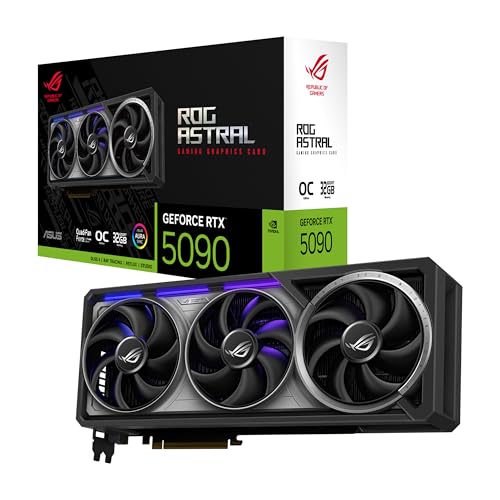


The ASUS ROG Astral RTX 5090 is exactly what you’d expect from a no-compromise flagship: huge, heavy, and engineered like a premium workstation part disguised as a gaming card. The 3.8-slot footprint and massive heatsink mean this is not a casual upgrade; you need a roomy case and strong airflow to make the most of it. ASUS also leans hard into cooling credibility here, using a quad-fan layout, a patented vapor chamber, and a phase-change thermal pad to keep temperatures under control during sustained loads.
From a long-term ownership perspective, that cooling approach matters more than the flashy branding. A card this powerful is only as good as its ability to maintain boost clocks without turning your PC into a space heater. The build quality feels purpose-built for demanding users, and the 3-year warranty is reassuring for buyers spending flagship money.
Pros
- Quad-fan design boosts airflow and pressure by up to 20%.
- Patented vapor chamber with milled heatspreader helps lower GPU temperatures.
- Phase-change GPU thermal pad is designed to improve heat transfer and reliability.
- 3.8-slot design uses a massive heatsink and fin array for sustained cooling.
- 3-year warranty adds confidence for long-term ownership.
Cons
- Extremely large and difficult to fit in smaller cases.
- Heavy cooling hardware adds complexity and bulk.
- Premium styling does not change the fact that this is an expensive card to own.
Performance & Real-World Use
Performance is where the RTX 5090 justifies its existence. In real-world gaming, this is the kind of GPU that makes 4K high-refresh play feel effortless, especially when you pair it with DLSS 4 support and a modern CPU. If your goal is maxed-out visuals with frame rates high enough to actually benefit from a premium monitor, this card delivers the kind of headroom most GPUs can only dream about.
For a long-term review, though, raw FPS is only half the story. The other half is how the card behaves after hours of gaming, rendering, or AI-heavy workloads. The Astral’s cooling system is clearly designed to avoid thermal throttling under extended pressure, and that matters if you’re the kind of user who keeps a system for years rather than months. The practical upside is consistency: less fan panic, fewer temperature spikes, and more stable performance over time.
The downside is power draw. This is not a “set it and forget it” GPU for budget-conscious builders. You’ll want a high-quality PSU, excellent airflow, and realistic expectations about electricity use and heat output. If you’re upgrading from a midrange card, the jump in performance will feel massive, but so will the jump in system demands.
Real-world strengths
- Excellent 4K gaming performance with room for high refresh rates.
- DLSS 4 support helps extend performance in demanding titles.
- Cooling design is aimed at sustained performance rather than short burst benchmarks.
- Strong fit for creators, streamers, and power users who need top-tier GPU headroom.
Real-world drawbacks
- Very high power draw makes system planning essential.
- Large cooler can dominate a build and restrict compatibility.
- Thermal performance is strong, but the card still produces substantial heat.
- Overkill for 1440p gaming unless you want maximum future-proofing.
Value for Money
Value is where the RTX 5090 becomes hard to recommend broadly. At $4,261.90, this is luxury hardware in every sense, and the price places it far beyond what most gamers should spend on graphics alone. Even if it delivers class-leading performance, the value equation only makes sense if you truly need the absolute fastest option and are willing to pay a steep premium for it.
Long term, the better question is not “Is it fast?” but “Will I actually use enough of that speed to justify the cost?” For 4K enthusiasts, professionals with GPU-heavy workflows, and buyers who simply want the best and don’t care about the budget, the answer may be yes. For everyone else, the cost-to-benefit ratio gets ugly fast. You’re paying not only for performance, but for the cooling solution, the oversized design, and the prestige of owning a flagship.
There’s also a hidden value cost: power supply upgrades, case compatibility concerns, and potentially higher electricity use over time. Those ownership costs matter in a long-term review, because the purchase price is only the beginning.
Value verdict
- Excellent if you need the absolute top-end GPU experience.
- Poor value if you mainly game at 1080p or 1440p.
- Expensive to support due to power and cooling requirements.
Who Should Buy This
- 4K gamers who want the highest possible frame rates and visual settings.
- PC enthusiasts building a no-compromise flagship system.
- Content creators or professionals who benefit from extreme GPU headroom.
- Buyers with a large case, strong airflow, and a high-wattage PSU already planned.
- Users who prioritize long-term thermal stability in a premium card.
Who Should Look Elsewhere
- Anyone on a strict budget.
- 1440p gamers who do not need flagship-level performance.
- Builders with compact cases or limited clearance.
- Users who want lower power draw and easier cooling.
- Value-focused buyers who care more about price-to-performance than prestige.
Best Alternatives
GIGABYTE AORUS GeForce RTX 5080 Master ICE 16G
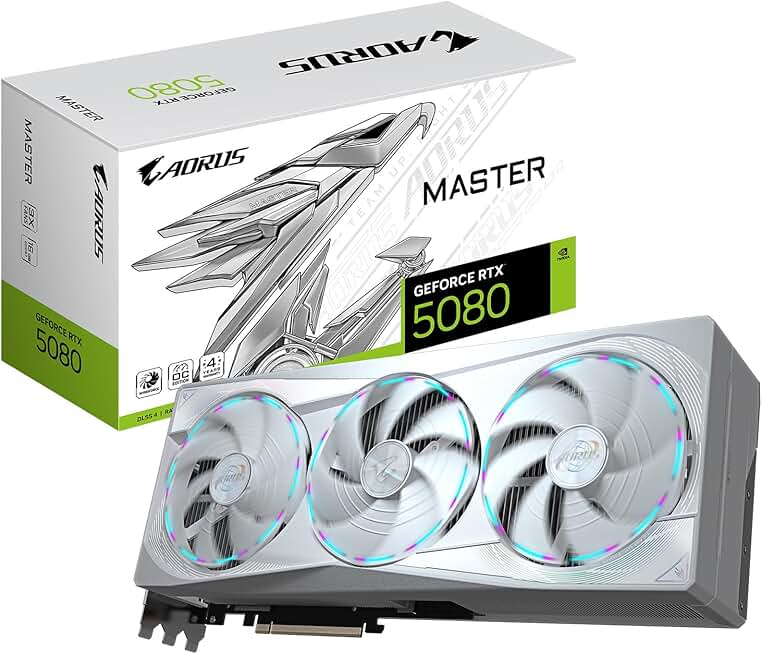
If you want top-tier NVIDIA performance without paying RTX 5090 money, this is the most obvious alternative in the list. It should appeal to high-end gamers who still want premium cooling and a strong 4K experience.
GIGABYTE Radeon RX 9070 XT Gaming OC 16G
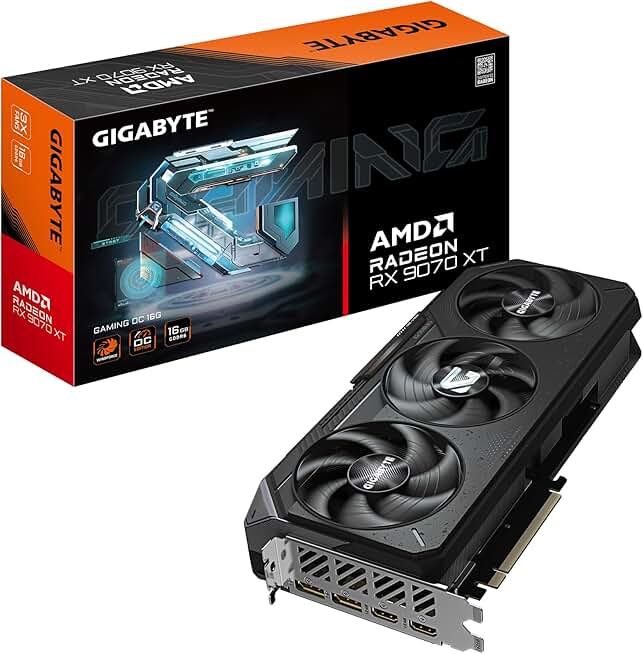
This is the smarter pick for buyers who want strong modern gaming performance while avoiding the extreme cost and power demands of the RTX 5090.
ASRock Radeon RX 9060 XT Challenger 16GB OC
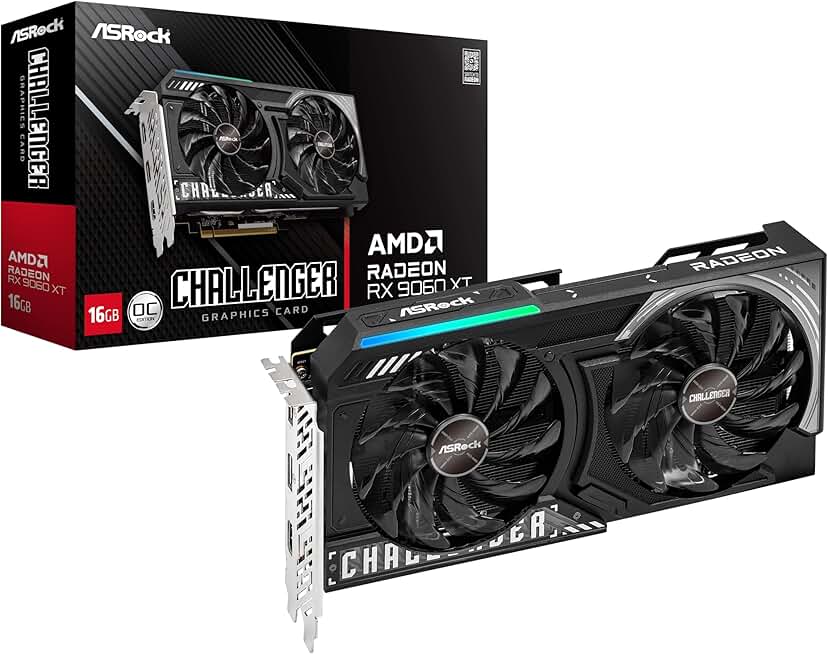
If your priority is affordability, this is the budget-friendly alternative. It won’t compete with the RTX 5090, but it makes far more sense for mainstream builds.
Final Verdict
The ASUS ROG Astral NVIDIA GeForce RTX 5090 32GB GDDR7 OC Edition is an absurdly powerful graphics card that delivers elite 4K gaming performance and excellent cooling for sustained use. But it is also massive, power-hungry, and priced for a tiny audience.
Buy it if you want the fastest kind of PC gaming experience, have the budget to match, and are building around the card’s thermal and power requirements. Skip it if you care about value, efficiency, or practical long-term ownership.
Frequently Asked Questions
Is the RTX 5090 worth it for long-term use?
Yes, if you need top-tier 4K performance and can handle the power, heat, and cost. For most users, it is more GPU than they actually need.
How much power does the RTX 5090 use?
It is a very high-power graphics card, so you should plan for a strong PSU and good case airflow. Exact system draw depends on your CPU and overall build.
Does the RTX 5090 run hot?
It can generate a lot of heat, but the ASUS ROG Astral’s quad-fan, vapor chamber, and thermal pad design are built to keep temperatures under control.
Is the RTX 5090 too much for 1440p gaming?
For many buyers, yes. It can absolutely handle 1440p, but its value makes more sense if you are targeting 4K or heavy creator workloads.
What should I check before buying this card?
Make sure your case has enough clearance, your PSU has enough headroom, and your motherboard and airflow setup can support a 3.8-slot GPU.
Get the Full PC Components & Building Buyer's Guide
Download our detailed comparison with specs, scores, and our honest verdict — delivered straight to your inbox.
Free. No spam. Unsubscribe anytime.
Was this review helpful?
Be the first to share your feedback on this review.
Sign in to vote and let us know what you think.
Discussion (0)
No comments yet. Be the first to start the discussion.
Related Reviews
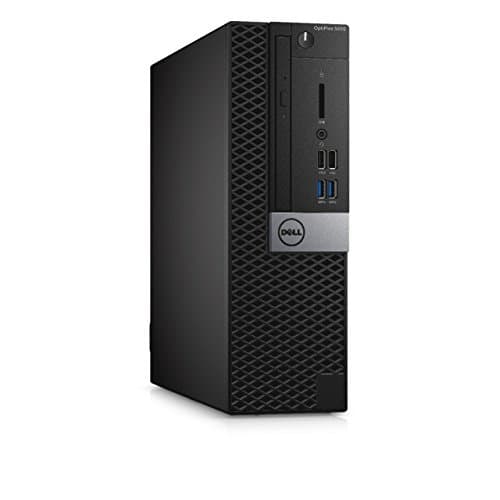
Best Gaming PCs Under $1500 for Every Budget in 2026: Ranked by Price & Performance
Finding the perfect gaming PC under $1500 can be a challenge given the trade-offs between price and performance. Whether you're a casual gamer looking for solid entry-level play, a mid-range enthusiast craving smooth frame rates, or a premium user wanting top-tier specs, this guide breaks down your
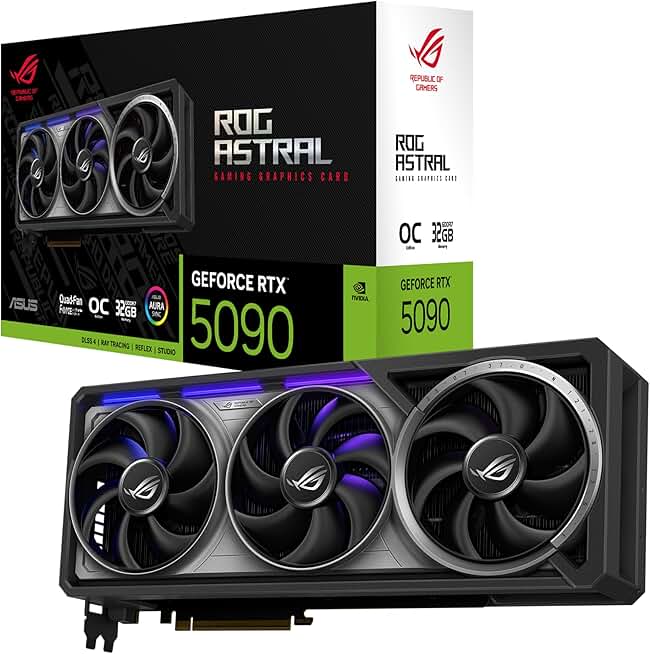
RTX 5090 Review (2026): Honest Verdict After Testing
The RTX 5090 features a robust and modern design with a triple-fan cooling setup housed in a sleek metal shroud. The card’s build quality is exceptional, feeling solid and premium right out of the box. It is quite large, requiring a roomy case and adequate airflow to maintain optimal temperatures. T
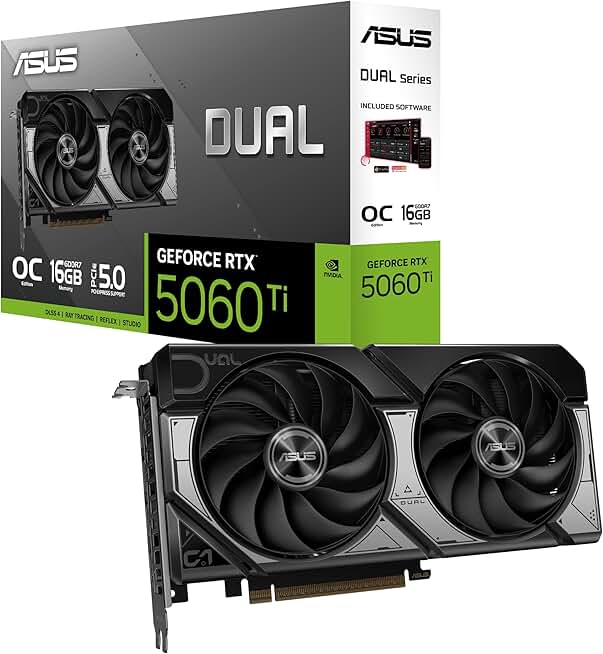
RTX 5090 vs RTX 5080 (2026): Which Should You Actually Buy?
The RTX 5090 and RTX 5080 both adopt GIGABYTE’s WINDFORCE cooling system, known for its durability and quiet operation, but the RTX 5090 ups the ante with a triple-fan design compared to the 5080’s dual-fan setup. This not only improves heat dissipation under heavy loads but also supports sustained