
What is OLED vs QLED vs Mini LED? A Complete 2026 Guide
If you’re trying to choose between OLED vs QLED vs Mini LED, the specs can feel confusing fast. Each display type looks great on paper, but the best choice depends on how you watch TV, how bright your room is, and whether you care more about perfect blacks, high brightness, or value. In this guide, you’ll learn how each technology works, where it shines, and what to buy if you want the best picture for your money.
How It Works
OLED, QLED, and Mini LED all aim to make images look more realistic, but they do it in very different ways.
OLED stands for Organic Light-Emitting Diode. In an OLED screen, each pixel creates its own light, so the TV can turn individual pixels completely off for true black levels and excellent contrast.
QLED stands for Quantum Dot LED. It still uses a backlight, but adds a quantum dot layer that improves color brightness and color volume, making images look more vivid—especially in bright rooms.
Mini LED is a more advanced backlight system that uses thousands of tiny LEDs divided into many dimming zones. That gives the TV much better control over brightness and contrast than older LED TVs, and when paired with quantum dots, it becomes a Mini LED QLED TV.
So, in simple terms: OLED is best known for perfect blacks, QLED is known for bright and colorful images, and Mini LED tries to bridge the gap by delivering strong brightness and improved contrast with better backlight control.
Key Benefits & Use Cases
OLED: Best for dark-room movie lovers
OLED is ideal if you want cinematic contrast, deep blacks, and excellent viewing angles. It’s a favorite for nighttime movie watching, premium streaming, and anyone who wants the most “pop” in shadow detail.
QLED: Best for bright rooms and colorful content
QLED TVs are often a strong pick for daytime viewing because their brightness helps fight glare. They’re also great for sports, general family viewing, and users who want vivid color without paying OLED-level prices.
Mini LED: Best all-around balance
Mini LED is a smart middle ground for buyers who want high brightness, better contrast than standard LED, and strong HDR performance. It’s especially appealing for mixed-use households, gaming, sports, and rooms with lots of ambient light.
Which one should you choose?
If your priority is perfect blacks, go OLED. If your room is bright and you want punchy color, go QLED. If you want a strong blend of brightness, contrast, and value, Mini LED is often the most practical choice.
What to Look For When Buying
1. Room brightness
Bright rooms usually favor QLED or Mini LED because higher brightness helps the image stay visible in daylight. Dark rooms make OLED’s contrast advantage more noticeable.
2. Black levels and contrast
If you watch a lot of movies, series, or darker content, contrast matters a lot. OLED usually wins here, while Mini LED can come close depending on the number of dimming zones and local dimming quality.
3. Motion handling
Sports and gaming benefit from high refresh rates and fast response times. Look for 120Hz or higher if you want smoother motion and less blur.
4. HDR performance
HDR looks best when a TV can get very bright while also keeping dark areas controlled. Mini LED and QLED often do well here, especially in brighter environments.
5. Value for your budget
Not every buyer needs the absolute best black levels. If price matters, Mini LED and QLED often deliver excellent performance for less than premium OLED models.
Top Recommended Products
TCL 65 Inch Class QM6K Series Mini LED QLED 4K HDR ✓ Prime


$599.99 ✓ Prime
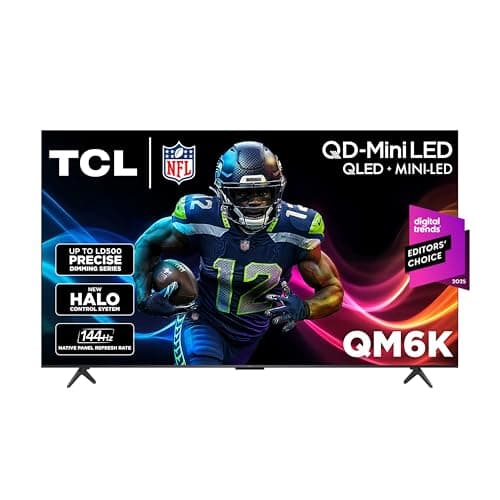
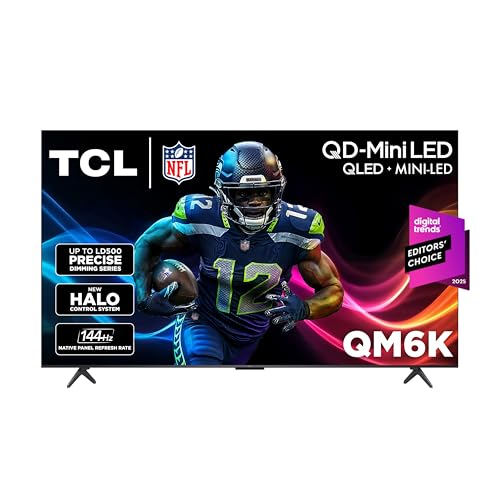
This model is a strong example of how Mini LED QLED competes with OLED on contrast while keeping brightness high for mixed lighting. TCL’s QD-Mini LED approach is positioned for sports, gaming, and streaming, with local dimming designed to reduce blooming and improve dark-scene detail.
- ✓ QD-Mini LED combines Mini LED precision with Quantum Dot color
- ✓ Halo control system aims to reduce blooming and improve shadow detail
- ✓ 144Hz native refresh rate supports smooth motion for sports and gaming
- ✓ Dolby Vision, HDR10+, HDR10, and HLG support broad HDR compatibility
- ✓ Good fit for buyers who want premium features at a lower price than many OLED TVs
- ✗ Not as naturally perfect in black levels as OLED in a dark room
- ✗ Mini LED performance can vary depending on scene complexity
TCL 55 Inch Class QM6K Series Mini LED QLED 4K HDR ✓ Prime


$547.99 ✓ Prime
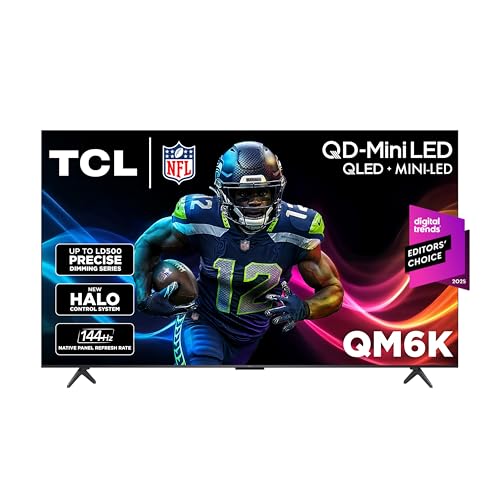
The 55-inch QM6K is a practical size for apartments, bedrooms, and smaller living rooms, while still delivering the same Mini LED QLED advantages. It’s a compelling option if you want a more affordable way to step into a brighter, more contrast-rich TV experience.
- ✓ Mini LED plus Quantum Dot color for improved brightness and vibrancy
- ✓ Designed for streaming, gaming, and sports
- ✓ 144Hz native refresh rate supports fast action
- ✓ Advanced local dimming helps dark scenes look deeper
- ✓ Strong value for buyers comparing QLED vs Mini LED
- ✗ Smaller screen size may not suit large rooms
- ✗ Still not the same as OLED for absolute black-level perfection
TCL 75 Inch Class QM7K Series Mini LED QLED 4K HDR ✓ Prime


$997.99 ✓ Prime
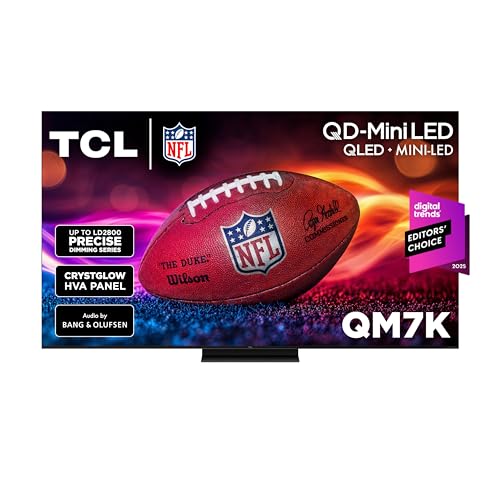
If you want a larger screen for movies, sports, and gaming, the 75-inch QM7K gives you a more immersive viewing experience. Its Mini LED QLED design is built to deliver strong brightness, refined dimming control, and anti-reflective performance in a wide range of rooms.
- ✓ QD-Mini LED blends brightness and contrast in a premium-style package
- ✓ Up to 2500 local dimming zones for more precise light control
- ✓ High HDR brightness is useful in bright environments
- ✓ Anti-reflective screen improves daytime viewing
- ✓ Great fit for buyers who want a large-screen alternative to OLED
- ✗ Larger size raises the total budget
- ✗ Bright-room strength does not automatically mean OLED-level black depth
TCL 55 Inch Class QM7K Series Mini LED QLED 4K HDR ✓ Prime
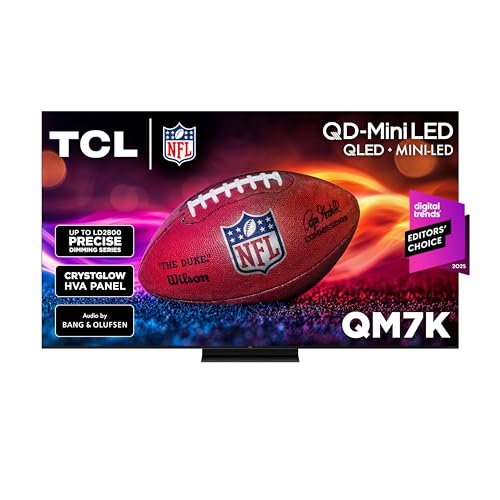
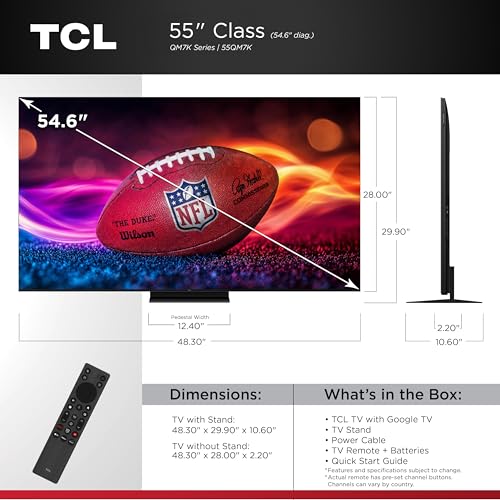
$598.00 13% OFF — Was $687.99 ✓ Prime
The 55-inch QM7K is a particularly attractive option if you want Mini LED performance with a more manageable size and a visible discount. It uses the same QD-Mini LED approach to deliver bright highlights, strong contrast, and better handling of reflections than many standard TVs.
- ✓ Up to 2500 dimming zones for precise backlight control
- ✓ CrystGlow HVA panel helps block reflections
- ✓ High HDR brightness supports mixed lighting rooms
- ✓ Good balance of size, price, and picture quality
- ✓ A strong value pick for shoppers comparing OLED vs QLED vs Mini LED
- ✗ Still not self-emissive like OLED
- ✗ Premium Mini LED features can be overkill for casual viewers
Common Mistakes to Avoid
Choosing by brand name instead of display technology
Many shoppers assume all TVs in a brand’s lineup perform similarly, but the panel technology matters more than the logo. A great QLED can be better for your room than an expensive OLED if brightness is your main issue.
Ignoring room lighting
OLED can look incredible in a dark room, but it may not be the best fit for a sunlit living room. If your room is bright, Mini LED or QLED often gives you a more practical viewing experience.
Assuming “more zones” automatically means better picture
Local dimming zone count helps, but implementation matters too. Processing, panel quality, and backlight control all affect whether a Mini LED TV looks clean or shows blooming.
Overlooking refresh rate for sports and gaming
If you watch fast motion, a 120Hz or 144Hz panel can make a real difference. Don’t focus only on contrast and color—motion clarity matters too.
Expecting QLED to behave like OLED
QLED improves color and brightness, but it still relies on a backlight. That means it generally won’t match OLED’s pixel-level black control in a dark theater-style setup.
Frequently Asked Questions
Is OLED better than QLED?
OLED is usually better for black levels, contrast, and viewing in dark rooms. QLED is often better for brightness and daylight viewing.
Is Mini LED better than QLED?
Mini LED is generally a step up from standard QLED because it gives the TV more precise backlight control. Many Mini LED TVs also use quantum dots, so they combine bright color with improved contrast.
Which is best for gaming: OLED, QLED, or Mini LED?
All three can be good for gaming, but Mini LED and OLED often stand out. OLED has fast pixel response, while Mini LED can offer higher brightness and strong HDR impact.
Which TV type is best for bright rooms?
QLED and Mini LED are usually better for bright rooms because they can get very bright and fight glare more effectively than OLED.
Is OLED worth the extra money?
It can be worth it if you care most about cinematic picture quality, deep blacks, and dark-room viewing. If you want better brightness or a lower price, Mini LED may be the smarter buy.
Get the Full TV & Streaming Buyer's Guide
Download our detailed comparison with specs, scores, and our honest verdict — delivered straight to your inbox.
Free. No spam. Unsubscribe anytime.
Was this review helpful?
Be the first to share your feedback on this review.
Sign in to vote and let us know what you think.
Discussion (0)
No comments yet. Be the first to start the discussion.
Related Reviews
8 Best OLED TVs in 2026 — Stunning Contrast, Gaming Speed, and Bright-Room Performance
If you’re shopping for the best OLED TVs 2026 , the challenge is narrowing down models that truly deliver the black levels, color, and motion OLED is famous for without overpaying. This list focuses on the TVs that make the most sense for real buyers: excellent picture quality, strong gaming feature
Best TVs Under $500 for Every Budget in 2026: Ranked by Price & Performance
Finding the best TVs under $500 means balancing picture quality, features, and price — without breaking the bank. Whether you want a basic screen for casual viewing, a feature-packed mid-range option, or the best performance you can get within this budget, there’s a TV tier for you. This guide break