

What is Ideal Humidity for a Home? A Complete 2026 Guide
The ideal humidity for a home is the moisture level in your indoor air that feels comfortable, supports healthy breathing, and helps protect your house from damage. For most homes, the sweet spot is usually 30% to 50% relative humidity, with many experts aiming around 40% to 45% for everyday comfort. If your air is too dry or too damp, you may notice static shocks, dry skin, musty odors, condensation, or even mold growth.
How It Works
Humidity is measured as relative humidity, which tells you how much moisture the air is holding compared with the maximum it could hold at that temperature. Warm air can carry more water vapor than cold air, so the same amount of moisture can feel different depending on the season. That is why a home may feel sticky in summer, dry in winter, or perfectly comfortable in between.
To control indoor humidity, homeowners usually rely on ventilation, humidifiers, or dehumidifiers. A dehumidifier pulls moisture from the air, collects it in a tank or sends it out through a drain hose, and then releases drier air back into the room. A humidifier does the opposite by adding moisture when the air is too dry, helping you stay closer to the ideal humidity for a home.
Key Benefits & Use Cases
Keeping indoor humidity in the right range can make a noticeable difference in daily comfort and long-term home care. When humidity stays near the ideal range, the air feels easier to breathe, wood floors and furniture are less likely to warp, and mold is less likely to take hold. It also helps reduce common issues like condensation on windows, dust mite activity, and that damp basement smell.
Here are the most common use cases for humidity control:
- Bedrooms: Helps reduce dry throat, stuffy air, and nighttime discomfort.
- Basements: Limits musty odors, damp walls, and mold risk.
- Bathrooms: Reduces lingering moisture after showers.
- Living rooms: Improves everyday comfort for the whole household.
- Laundry areas: Helps dry clothes faster and prevents damp buildup.
What to Look For When Buying
If you’re shopping for a humidity-control device, these five criteria matter most:
- Coverage area: Match the unit to the square footage of the room or floor you want to manage.
- Moisture removal capacity: Look for pint-per-day performance that fits how damp your space is.
- Drainage options: A drain hose is useful if you want continuous operation without emptying a tank.
- Controls and automation: Features like target humidity settings, timers, and auto shut-off make operation easier.
- Noise and efficiency: Quieter, energy-conscious models are better for bedrooms and everyday use.
Top Recommended Products
hOmeLabs Dehumidifier 1,800 Sq Ft Wi-Fi 4.7★ (reviews not provided) ✓ Prime
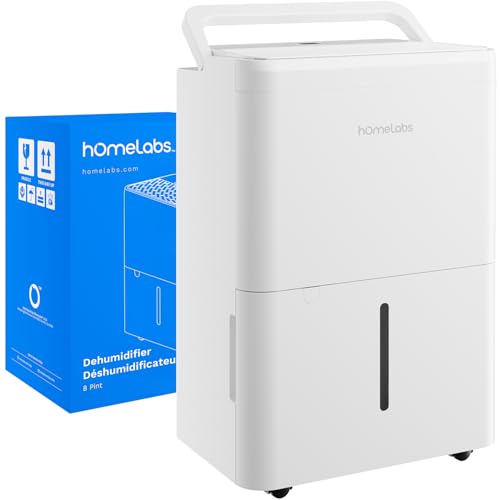


9% OFF — Was $189.99 $172.49 ✓ Prime
This Wi-Fi-enabled option is a strong fit if you want smart humidity control for a home without a lot of noise. It removes moisture efficiently, supports continuous drainage, and is designed for spaces up to 1,800 square feet.
- ✓ Removes up to 8 pints per day at 80°F, 60% RH and up to 24 pints max at 95°F, 90% RH
- ✓ Whisper-quiet 38dB operation for bedrooms, nurseries, and offices
- ✓ Includes a 3.3 ft drain hose for continuous drainage
- ✓ Wi-Fi control with app or voice assistants
- ✓ Auto shut-off, washable filters, and portable handle
- ✗ Best for small to medium spaces rather than whole-house moisture problems
- ✗ Higher price than basic non-smart models
1500 Sq. ft Dehumidifier for Basement and Large Room 4.6★ (reviews not provided) ✓ Prime
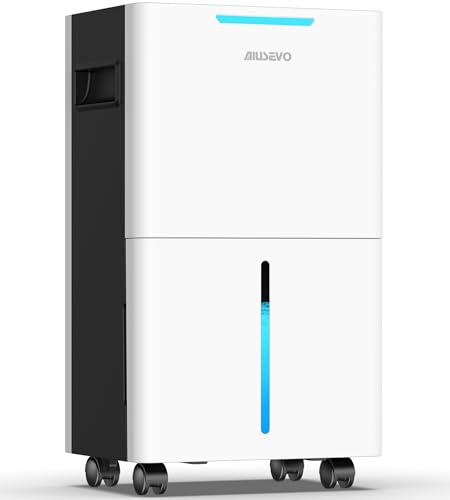


$138.99 ✓ Prime
This model is a practical choice for households that want straightforward moisture control with flexible modes. It is especially useful if you want to maintain the ideal humidity for a home in basements, bathrooms, bedrooms, or an RV.
- ✓ Removes up to 21 pints per day and covers up to 1,500 sq. ft.
- ✓ Three modes: DEHU, DRY, and CONT
- ✓ Adjustable humidity range from 30% to 80%
- ✓ Includes a drain hose for continuous drainage
- ✓ 24-hour timer, child lock, and portable wheels
- ✗ Smaller tank than larger whole-home units
- ✗ Best performance depends on keeping doors and windows closed
5000 Sq.Ft Dehumidifier for Basement 4.5★ (reviews not provided) ✓ Prime
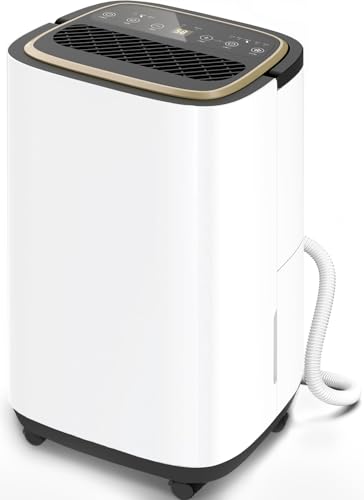


$129.99 ✓ Prime
If you need serious moisture removal for a large home, basement, or garage, this is the most powerful option in the list. It is built for bigger spaces where keeping humidity in the ideal range requires more capacity and longer run times.
- ✓ Designed for spaces up to 5,000 sq. ft.
- ✓ Removes humidity from 90% down to a more comfortable 30%
- ✓ 3-in-1 operation: humidity control, laundry drying, and air circulation
- ✓ Continuous drainage or removable tank options
- ✓ 24-hour timer, child lock, washable filter, and frost sensor
- ✗ May be larger than needed for small rooms
- ✗ More power than necessary if your humidity issue is mild
Common Mistakes to Avoid
- Setting the humidity too low: Air that is too dry can cause irritated skin, static electricity, and discomfort.
- Ignoring room size: A unit that is too small will struggle to maintain the ideal humidity for a home.
- Leaving doors and windows open: This makes it harder for any humidity-control device to work efficiently.
- Forgetting to clean filters: Dirty filters can reduce performance and airflow.
- Assuming one setting fits every season: Your home may need different humidity levels in winter and summer.
Frequently Asked Questions
What is the ideal humidity for a home?
Most homes are most comfortable and healthy at 30% to 50% relative humidity. A common target is around 40% to 45%.
Is 30% humidity too low for a house?
Thirty percent is usually acceptable, but some people may notice dry skin, static, or throat irritation if the air gets too dry.
Is 50% humidity too high indoors?
Fifty percent is still within the recommended range, but if your home feels damp or you see condensation, lowering it a bit may help.
Do I need a dehumidifier to maintain ideal humidity for a home?
Not always, but a dehumidifier is helpful in basements, bathrooms, laundry rooms, and humid climates where moisture builds up quickly.
How do I know if my home humidity is too high or too low?
Too high often causes musty smells, condensation, and mold risk. Too low often causes dry skin, static shocks, and irritated breathing.
Get the Full Home Buyer's Guide
Download our detailed comparison with specs, scores, and our honest verdict — delivered straight to your inbox.
Free. No spam. Unsubscribe anytime.
Was this review helpful?
Be the first to share your feedback on this review.
Sign in to vote and let us know what you think.
Discussion (0)
No comments yet. Be the first to start the discussion.
Related Reviews

Midea U-Shaped AC Review (2026): Honest Verdict After Testing
If you’re looking for a window air conditioner that won’t drown out your TV, conversation, or sleep, the Midea 12,000 BTU U Shaped Smart Inverter Window Air Conditioner is one of the most compelling options in 2026. It solves the biggest complaints shoppers have about window ACs: loud operation, blo

Midea U-Shaped vs traditional window AC (2026): Which Should You Actually Buy?
The biggest design advantage in the Midea U-Shaped vs traditional window AC debate is simple: the U-shaped unit uses your window as part of the structure, which helps block outside noise while still letting you open the window. That makes it feel less like a bulky appliance and more like a cleaner,

7 Best Air Purifiers for Smoke in 2026 — Cleaner Air for Wildfire Season, Odors, and Dust
If wildfire smoke is creeping into your home, you need an air purifier that can actually help—not just look good on a product page. The best air purifiers for smoke combine strong CADR, HEPA-grade filtration, and activated carbon to reduce fine particles and lingering odors. We picked these models f