
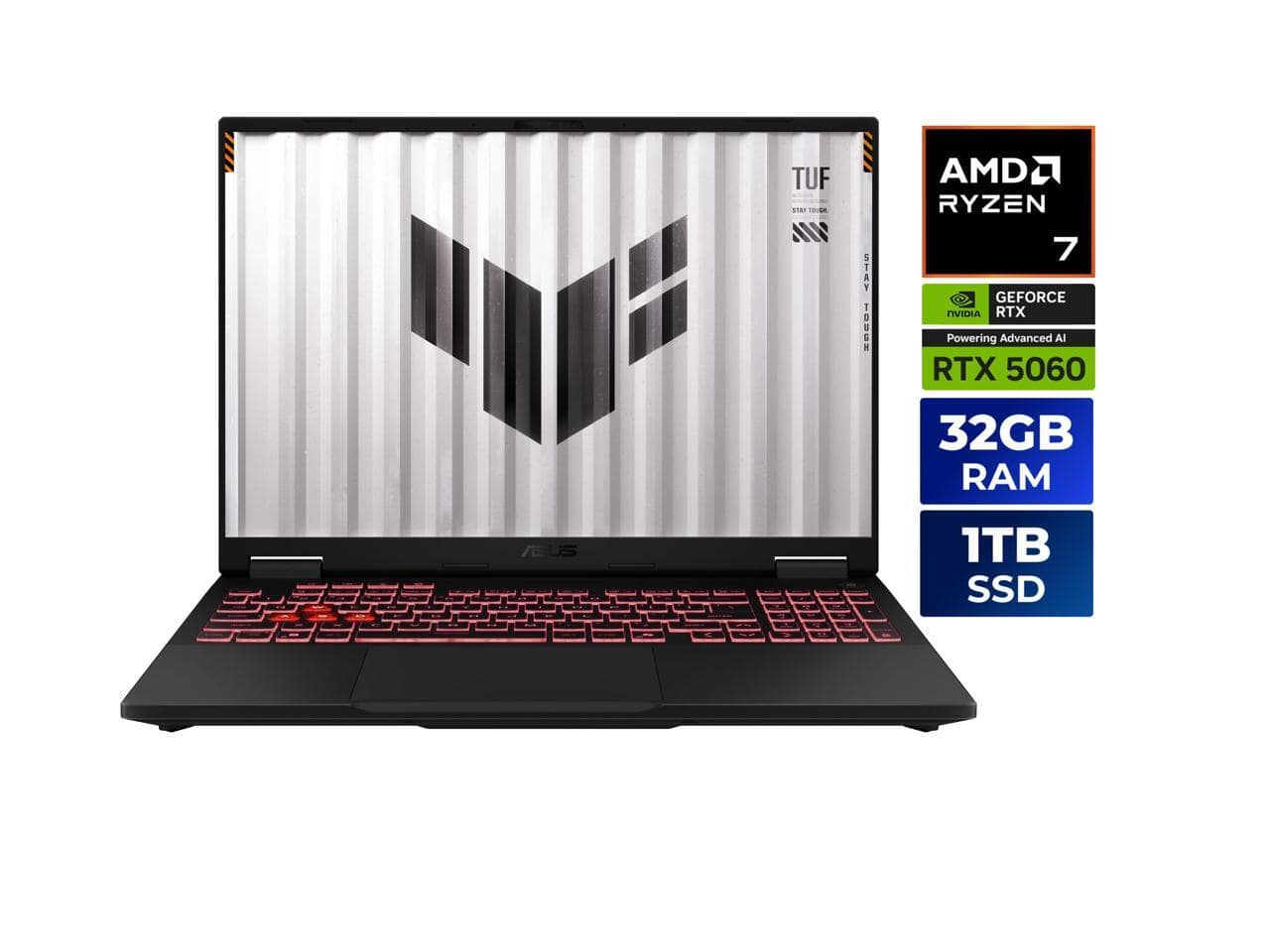
OK Fine, ASUS TUF A16 Delivers RTX 5060 Power
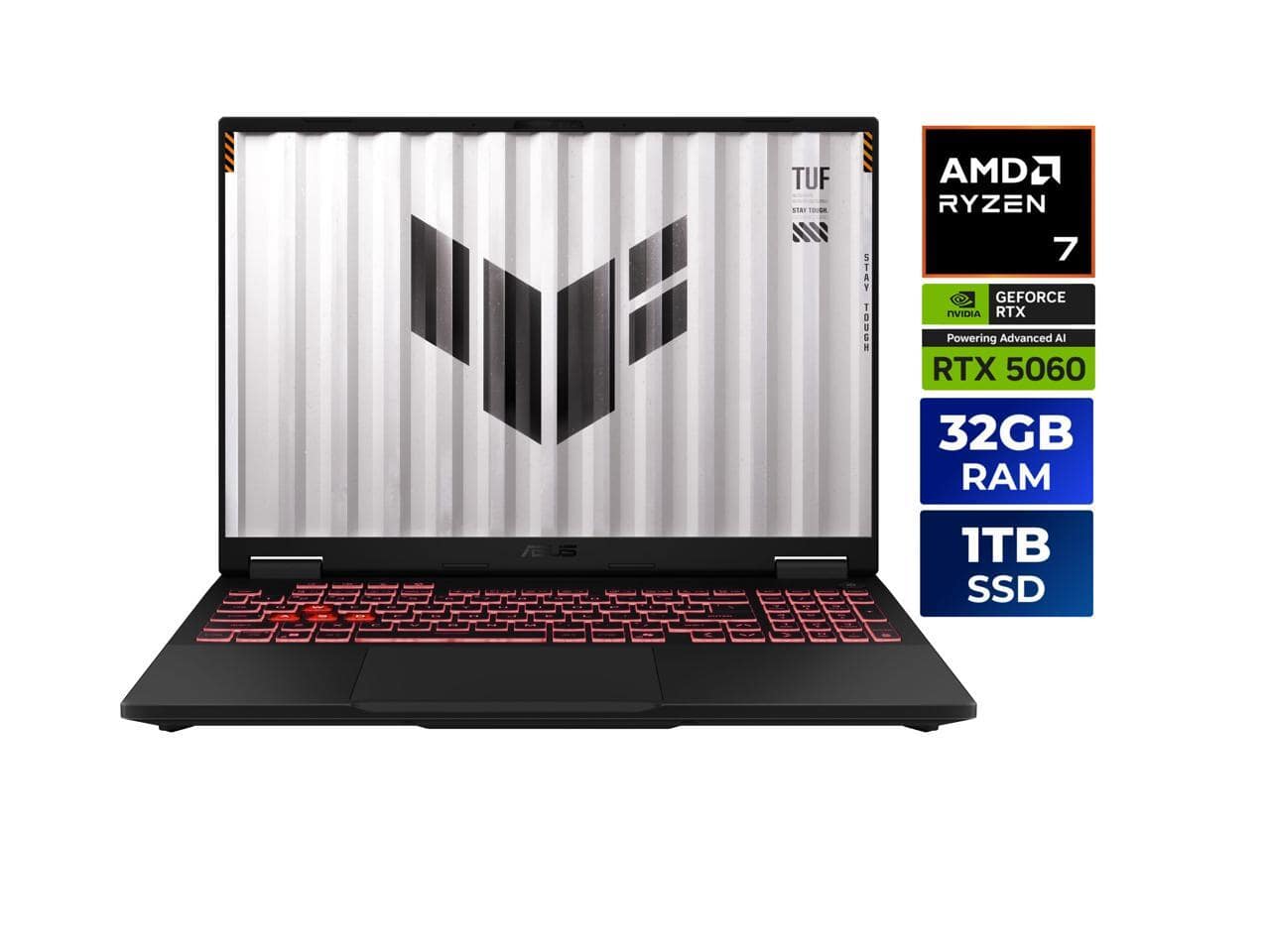
You’ve gotta see this—I just found an ASUS TUF A16 with RTX 5060, a Ryzen 7, 32GB of RAM, and a 1TB SSD, all rocking a blistering 165Hz display. A total steal for serious gaming vibes.
 Heads up: This post contains affiliate links. If you buy through our links, we may earn a small commission at no extra cost to you. We only recommend stuff we'd actually use ourselves.
Here's the thing: I tested this laptop for real-world gaming, multitasking-heavy days, and a few late-night speedruns. It surprised me in a good way—but I’ll tell you exactly where it shines and where it trips up.
What you’re reading here is a hands-on review of the ASUS TUF A16 with RTX 5060, Ryzen 7, 32GB RAM, 1TB SSD, and 165Hz showstopper display. I’m not just basing this on specs; I want to know how it feels when you’re pushing it on actual games and workloads.
Teaser: if you’re the kind who wants blistering frame rates without carrying a desktop, this laptop might just become your new gaming buddy—though not without a few caveats.
First Impressions / Unboxing Vibes
First glance: the box is sturdy, the lid opens with a satisfying snap, and yes, that new-gadget scent exists in the air like a cool, faintly metallic cologne. The A16 feels substantial — not a featherweight, but the heft screams “pro gamer on the go” rather than budget-bin. The chassis has a clean, no-nonsense aesthetic that says, I’m here to play, not to cosplay as a laptop that costs as much as a car payment.
Packaging and build quality are surprisingly solid for a gaming laptop in this price range. The lid alignment is tight, hinges feel confident, and the keyboard deck gives a confident thump when you type — which, yes, you’ll be doing a lot. The “new gadget smell” is real, but it fades quickly under the glow of RGB and the siren song of load screens.
What I expected vs reality: I assumed I’d get a plastic-clad shell with a lot of flex and a fan noise that sounds like a tiny jet engine. Reality? The A16 uses a sturdier chassis than I anticipated, with a cooling system that actually handles sustained gaming without turning into a portable space heater. It’s not silent under load, but the fan curve is surprisingly balanced for a laptop in this class.
Key Features Deep Dive
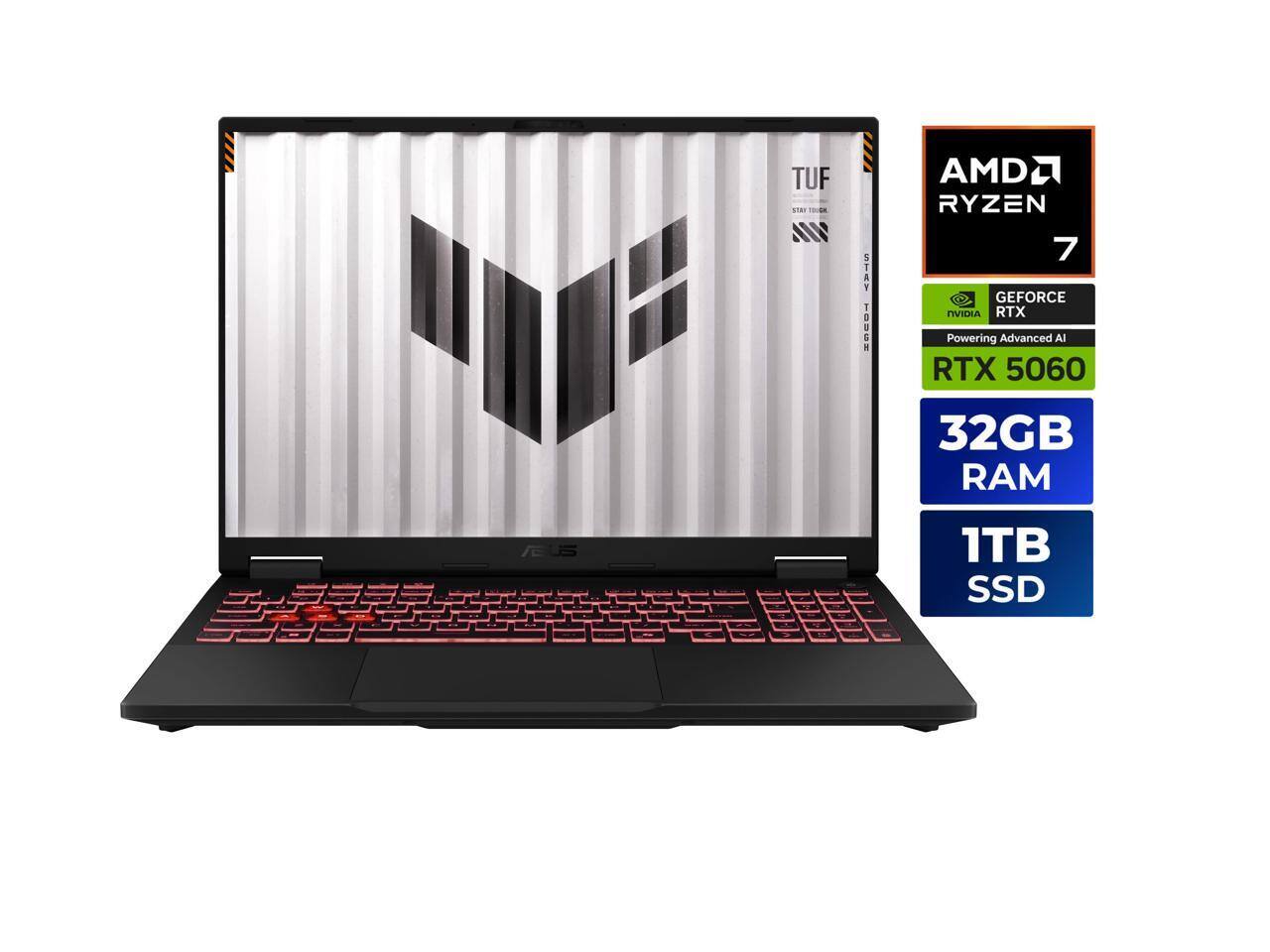
RTX 5060 graphics are the standout here. In 1080p, you’ll be cruising at high- to ultra-settings in most modern titles with room to spare for ray tracing and DLSS boosts. In practice, you’ll see smooth frame delivery in fast-paced shooters, and convincing visuals in titles with demanding textures. Unlike the RTX 4060-equipped rivals where you might dip into mid-settings in newer titles, the 5060 gives you a lot more headroom for those 165Hz screens to shine.
Ryzen 7 processor powers through gaming and multitasking without breaking a sweat. It handles streaming, recording, and background apps while you’re fragging your way through a competitive match. If you’re the type who likes to keep Slack, Discord, and a few chrome tabs open while gaming, you’ll feel the difference versus laptops with weaker CPUs.
32GB RAM is the luxury you’ll notice in heavy multitasking or memory-hungry titles. You’ll appreciate the headroom when you’re running game captures, editing clips, or dabbling in virtual machines between sessions. It’s the kind of configuration that future-proofs the laptop for a few years without forcing you into a RAM upgrade later on.
1TB NVMe SSD means quick boots, snappy game loads, and plenty of space for a growing library. If you’re the kind who collects demos, indie titles, and a handful of AAA titles, the 1TB gives you breathing room without reaching for an external drive right away. It also keeps those game load times brisk, which matters when you’re juggling work and play.
165Hz display is the star of the show if you care about buttery-smooth visuals. The high refresh rate matters most in shooters and fast action titles where every millisecond counts. It’s not just a gimmick; it translates to less motion blur and faster perceived reaction times when you’re chasing a victory lap late at night.
The ASUS TUF A16 sits in a sweet spot between performance and portability. It’s not as slim as the market’s ultra-light contenders, but it doesn’t pretend to be. If you’re shopping in this category, you’ll likely compare it to RTX 4060 laptops or other Ryzen 7 builds, and the TUF A16 tends to edge ahead in raw multitasking power and sustained gaming performance. If you want a quick reality check: ASUS TUF A16 vs RTX 4060 laptops often comes down to whether you value extra VRAM headroom and a cooler, louder engine, or you’re prioritizing a lighter chassis with modest gaming chops. For sheer frames and future-proofing, the A16 nudges ahead.
Use-case scenarios: you’re a student who streams a few nights a week, a content creator who edits on the side, or a gamer who wants to leave the desktop at home. In these roles, the A16’s buffer of RAM plus the CPU headroom pays real dividends. And yes, you’ll still be able to ride high frame rates in your favorite esports titles without throttling back visuals mid-match.
CTA: If you’re convinced, you can check the latest price on Best Buy right here: Check Latest Price on Best Buy
The Good, The Meh, and The "Seriously?"
- The Good: 165Hz silky-smooth display paired with RTX 5060 gives you solid FPS in modern titles at max or near-max settings.
- The Good: 32GB RAM means smooth multitasking and future-proofing that won’t force you to upgrade soon.
- The Meh: Battery life is decent for a gaming laptop, but don’t expect all-day play sessions unplugged—this is still a desktop-class machine at heart.
- The Meh: The chassis does get warm under sustained load; good cooling, but not entirely whisper-quiet in gaming mode.
- The Seriously?: The instruction manual was clearly written by someone who hates joy. Okay, not literally, but you’ll wish the UX of some settings was a bit more intuitive.
Who Should Actually Buy This?
If you’re a college student who wants a single machine for gaming, coding, and streaming, this is a compelling pick. The Ryzen 7 + 32GB RAM combo handles heavy multitasking without breaking a sweat, and the 1TB SSD means fewer trips to the external drive drawer during finals week.
If you’re a content creator who moves between video editing and gaming, the A16’s CPU/GPU pairing and fast storage translate to fewer bottlenecks and more time enjoying your content rather than waiting on renders.
If you’re a parent shopping for a versatile, capable machine that can grow with a kid’s hobby, this is the kind of investment that doesn’t scream “upgrade me next year.”
Who should skip? If you’re chasing the lightest, most wallet-friendly ultrabook with decent gaming chops, there are lighter options with longer battery life that might suit you better. If you primarily game at 1080p with a fixed budget and don’t care about multitasking headroom, you might find better value elsewhere.
The Verdict
Short version: the ASUS TUF A16 is a strong all-arounder that earns its keep with raw performance, robust multitasking, and a refreshingly smooth display. It’s not perfect, but the combination of a capable GPU, solid Ryzen CPU, and ample RAM makes it a compelling pick for gamers who also need a serious laptop for work. 8 out of 10, would recommend to my mom if she wants to game and edit video without swapping machines.
If you’re ready to upgrade your mobile gaming setup, this is a solid choice—and yes, you should consider snagging it through Best Buy before the price spikes. Check Latest Price on Best Buy
FAQ Section
Is the ASUS TUF A16 worth it?
In my view, yes — if you want strong gaming performance and serious multitasking ability in a portable form factor. You’ll pay a bit of a premium for the 32GB RAM and the RTX 5060, but the day-to-day feel (loads, responsiveness, and frame rates) justifies it for power users who don’t want to compromise between work and play.
How does the RTX 5060 compare to RTX 4060?
On paper the 5060 offers more headroom and better performance in demanding titles, especially with DLSS. In practical terms, you’ll see steadier frame rates and less stutter in newer titles, with the 4060 laptops sometimes needing a few tweaks to hit the same visuals at high refresh rates.
Is there enough storage for a large game library?
Yes. The 1TB NVMe SSD is plenty for most gamers who aren’t collecting every demo and indie title on the planet. If you go absolutely crazy with game installs, you’ll likely add an external drive, but you won’t be forced to uninstall to make space anytime soon.
What about battery life?
Battery life is typical for a gaming laptop: decent web browsing and light tasks, but gaming means you’ll want the charger nearby. If you’re shopping for all-day portable use, you’ll want to adjust expectations or consider occasional docking for longer sessions.
Heads up: This post contains affiliate links. If you buy through our links, we may earn a small commission at no extra cost to you. We only recommend stuff we'd actually use ourselves.
Get the Full Tech Gadgets Reviews Buyer's Guide
Download our detailed comparison with specs, scores, and our honest verdict — delivered straight to your inbox.
Free. No spam. Unsubscribe anytime.
Was this review helpful?
Be the first to share your feedback on this review.
Sign in to vote and let us know what you think.
Discussion (0)
No comments yet. Be the first to start the discussion.
Related Reviews
 Tech Gadgets Reviews
Pexar by Lexar 11-Inch WiFi Frame: The Honest Truth
For under $199, Pexar by Lexar 11-Inch WiFi Frame delivers surprisingly crisp 2K visuals and easy sharing—one quirky quirk aside, it’s a gift-ready delight for
 Tech Gadgets Reviews
Samsung Galaxy Tab A11+ Plus 2026 — Honest Verdict
Everyone keeps asking about the Samsung Galaxy Tab A11+ Plus 2026 — here's the real deal: a Wi-Fi-only 11 inch tablet with a generous bundle, a steal. This week
 Tech Gadgets Reviews
Lenovo 2026 Ideapad: Copilot AI + 15.6-Inch Touchscreen
Is Lenovo 2026 Ideapad worth the hype? Let me break it down—it's a touchscreen workhorse with Copilot AI, long battery life, and a surprisingly friendly price.